
How Durable Cafeteria Furniture Supports Better Student Spaces
Creating K-12 and University Dining Environments Built for Learning, Gathering, and Everyday Use
A school cafeteria is no longer simply a place where students eat lunch. In today’s K-12 schools, colleges, and universities, dining areas often double as student commons, study spaces, meeting areas, and social hubs. That means the furniture filling these spaces needs to work just as hard as the students who use them.

Choosing durable cafeteria furniture can help schools create inviting, flexible environments while standing up to the demands of high-traffic educational spaces. From commercial-grade chairs and stools to communal tables, booths, and banquettes, the right furniture can improve how students experience and use a space throughout the day.
At SCI Custom, we design and manufacture commercial furniture for educational environments with durability, flexibility, and student experience in mind. Whether you’re refreshing an existing cafeteria or planning a complete dining hall renovation, selecting furniture designed for commercial use can help create a student space that looks great and performs for years to come.
Why Durability Matters in School Cafeteria Furniture
Few pieces of furniture see as much daily activity as a cafeteria chair or table.
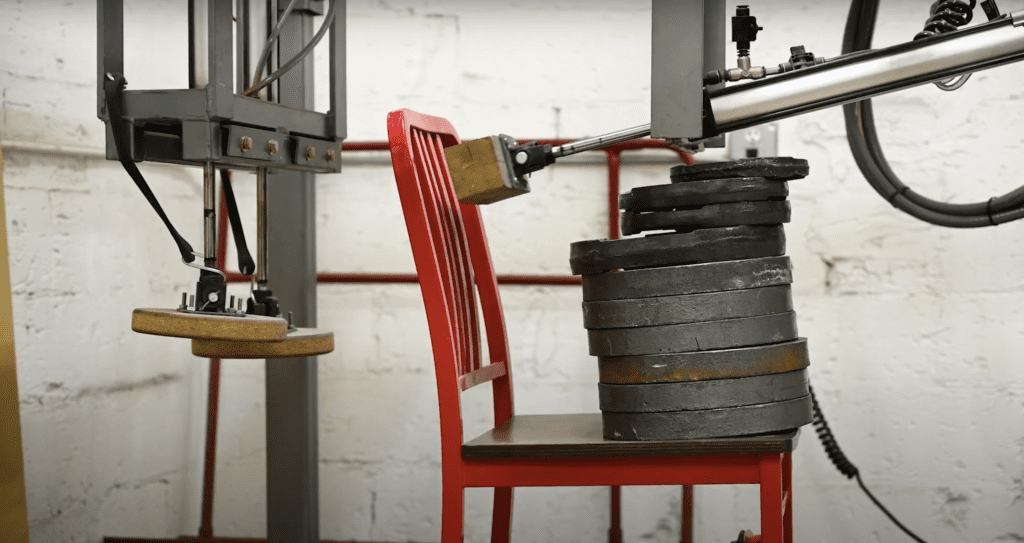
Students pull chairs across floors, backpacks bump against furniture, tables are used for meals and studying, and surfaces need to withstand frequent cleaning. In a busy dining hall, residential-grade furniture simply isn’t designed for that level of use.
Commercial cafeteria furniture is built specifically for demanding environments. Durable construction, commercial-grade finishes, and materials selected for frequent use can help schools reduce premature wear while maintaining a polished appearance.
When evaluating cafeteria furniture, facilities teams should consider:
- Commercial-grade construction
- Durable and cleanable surfaces
- Stable table and chair frames
- Replaceable or serviceable components
- Resistance to everyday scratches and impacts
- Furniture that can accommodate frequent layout changes
- Finishes appropriate for high-traffic educational environments
Durability isn’t only about how long a chair or table lasts. It’s about selecting furniture that continues to function well and contribute to the space after thousands of students have used it.
Create Variety With Commercial Cafeteria Chairs
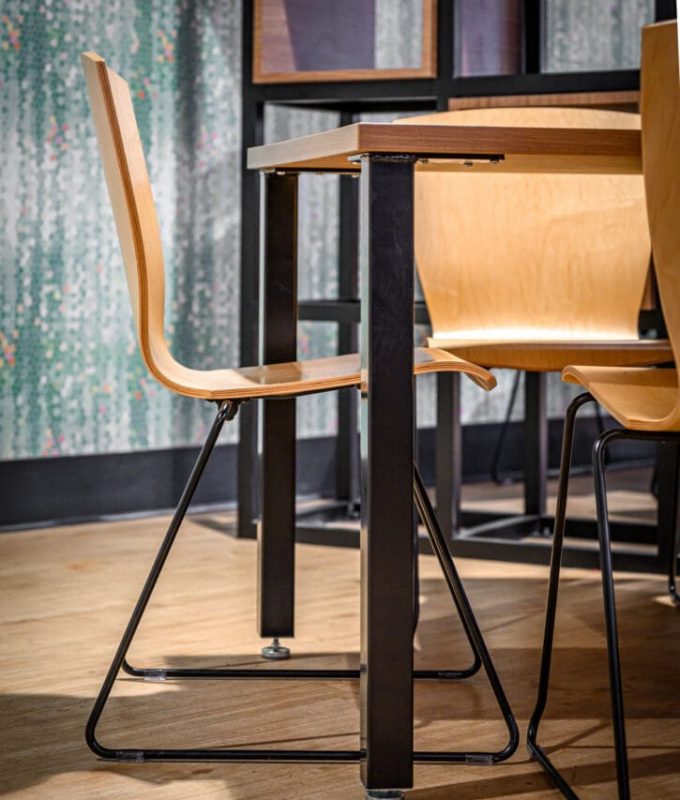
Traditional cafeterias often relied on rows of identical tables and chairs. Modern educational dining spaces are taking a different approach.
Mixing seating styles can create distinct areas within a large cafeteria and give students more choices about where and how they sit.
Commercial dining chairs are ideal for flexible seating areas because they can be rearranged as needs change. Different frame styles, back designs, seat materials, and finishes also allow schools to coordinate furniture with the overall interior design.
Explore SCI Custom Chairs & Stools
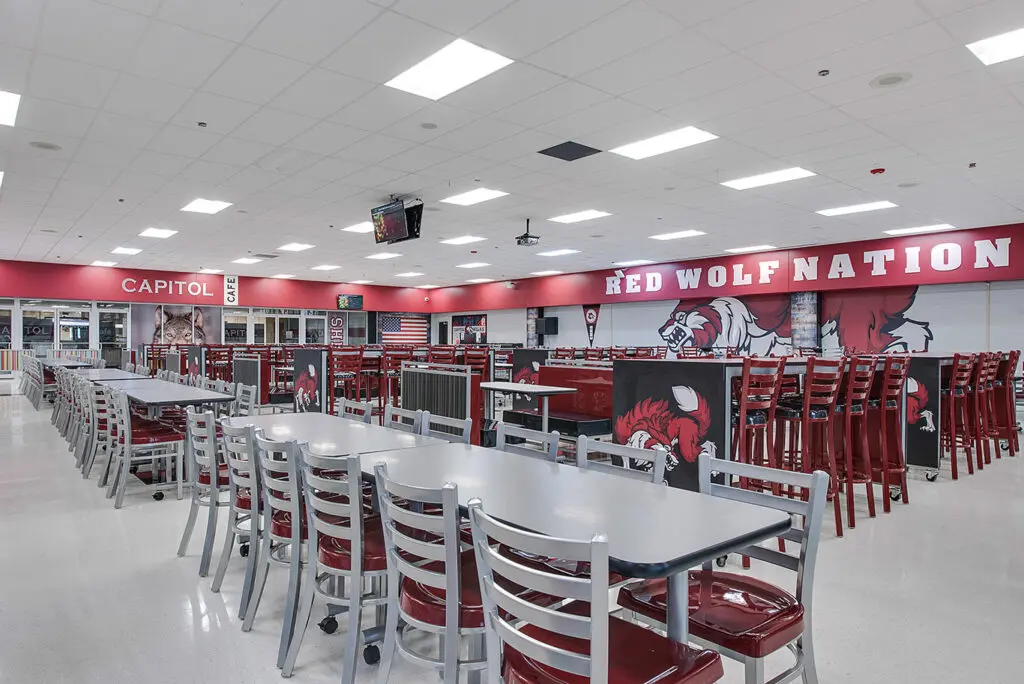
For schools incorporating branding into a cafeteria remodel, chair finishes can also complement school colors, graphics, murals, and custom millwork to create a more cohesive environment.
Encourage Connection With Communal Tables
Some of the best student interactions happen around a shared table.
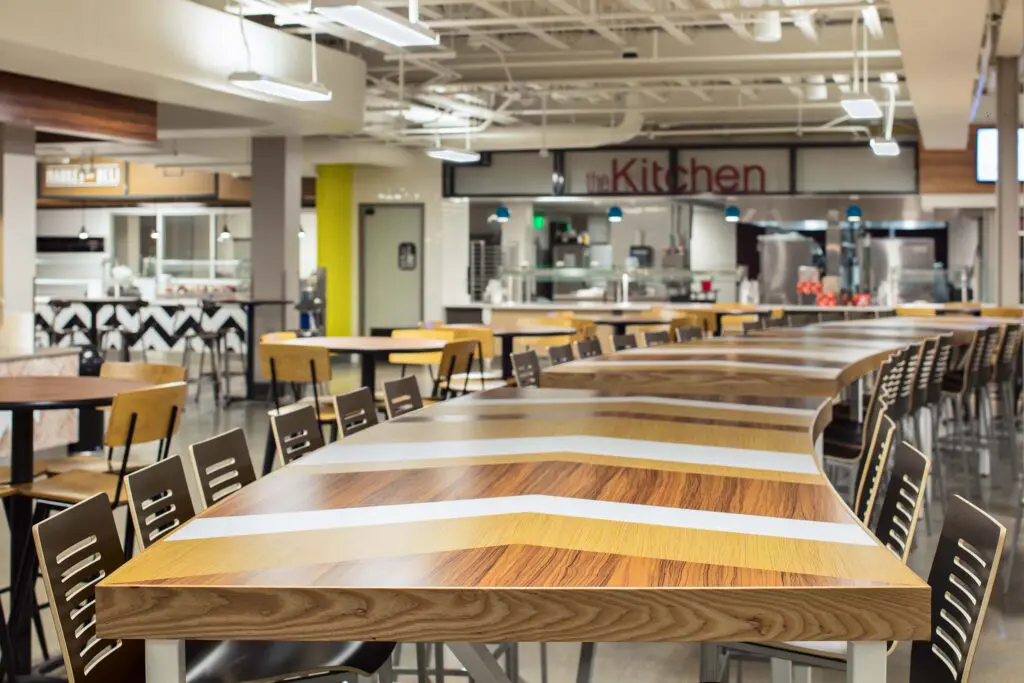
Large communal cafeteria tables encourage groups to gather for lunch, study sessions, meetings, or conversations between classes. They can also help efficiently accommodate more students in large dining environments.
SCI Custom has incorporated communal tables into higher education projects where schools wanted to provide a broader range of seating experiences. Custom tables can be designed around the needs of the space, including different heights, sizes, finishes, seating configurations, and integrated features.
Explore SCI Custom Table Tops & Bases
For universities in particular, communal tables can help transform the dining hall into a space students continue using well beyond meal periods.
Add Comfort With Booths and Banquettes
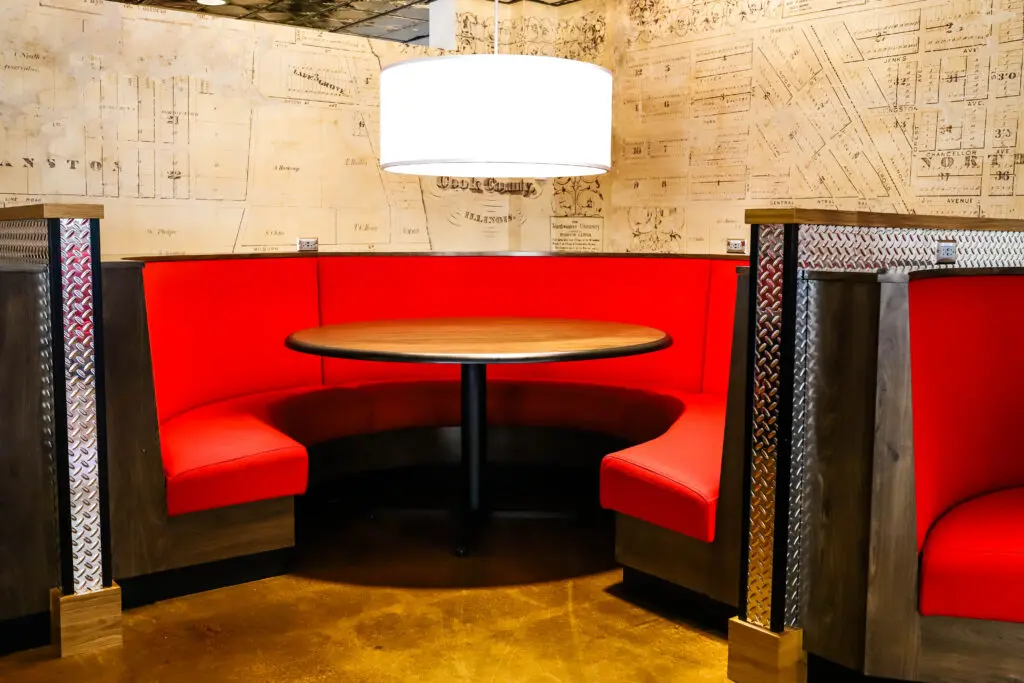
Not every student wants to sit at an open table.
Commercial booths and banquettes can introduce comfortable, semi-private seating into cafeterias, student unions, and university dining halls. They can also help define zones within large open environments.
Booths are particularly useful when schools want to make dining spaces feel less institutional and more like the restaurants, cafés, and social spaces students encounter outside campus.
Depending on the layout, custom booths and banquettes can be configured along walls, incorporated around architectural features, or used to create smaller gathering areas within a large dining room.
By combining booths with traditional chairs, stools, and communal tables, schools can create a varied seating environment designed for different student preferences.
Use Counter-Height Seating to Make Better Use of Space
Counter- and bar-height seating provides another way to diversify a cafeteria while taking advantage of areas that might otherwise go unused.
Window counters, perimeter seating, café areas, and narrow spaces can become functional student seating with the right stools and surfaces.
These areas are especially valuable for students who want to eat independently, work on a laptop between classes, or spend a shorter amount of time in the dining hall.
Combining multiple seating heights also creates visual interest and can help a large cafeteria feel more dynamic.
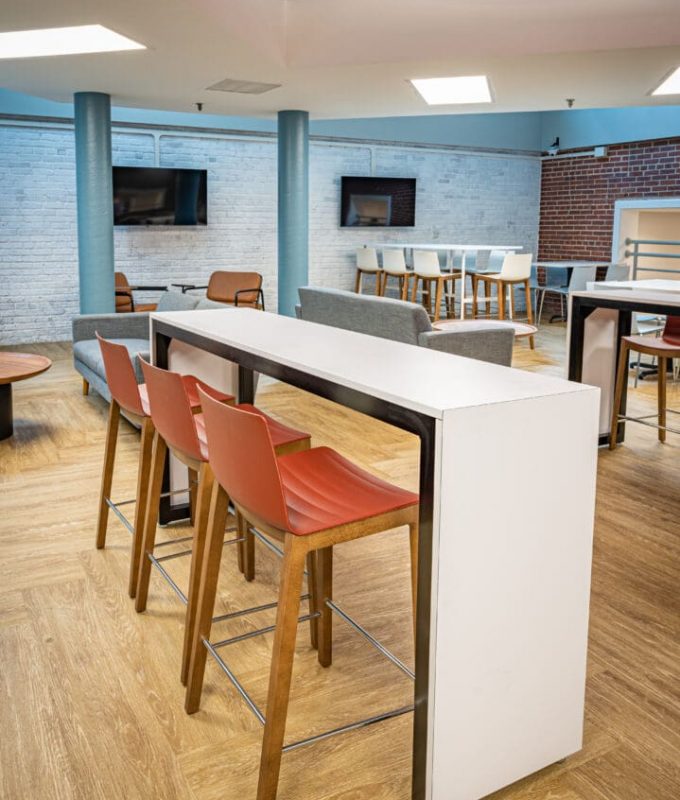
Select Tables Designed for Everyday Student Use
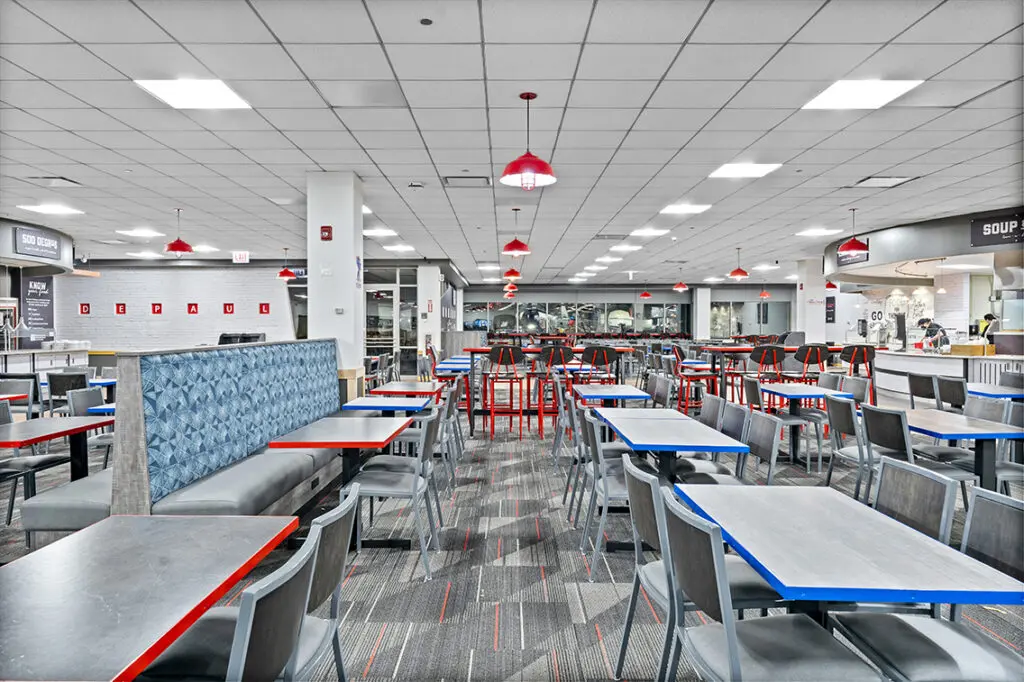
The tabletop is one of the hardest-working surfaces in any cafeteria.
School dining tables need to handle meals, drinks, laptops, textbooks, backpacks, cleaning, and constant use. Material selection therefore plays an important role in long-term performance.
Commercial laminate table tops can be particularly practical for high-use dining environments because they provide a durable, easy-to-maintain surface while offering schools flexibility in colors and finishes.
Table design also presents an opportunity to reinforce the visual identity of a space. Tabletop finishes can coordinate with school colors, surrounding furniture, custom graphics, and architectural materials.
Furniture Can Help Turn Cafeterias Into Student Destinations
Durability is important, but successful cafeteria furniture should accomplish more than survive daily use.
It should help create a space students actually want to spend time in.
SCI Custom’s work at North Carolina A&T demonstrates this approach. The university’s dining hall renovation incorporated branded community tables, varied seating choices, charging capabilities, graphics, detailed millwork, and durable finishes to transform a large cafeteria into a more modern campus dining environment.
Similarly, SCI’s work with DePaul University incorporated communal tables, booths, counter-height stools, and flexible dining chairs to give students different ways to use the renovated dining environment.
The common theme is choice.
Instead of filling an entire cafeteria with one furniture configuration, schools can combine:
- Dining chairs for everyday flexibility
- Barstools for counter-height seating
- Communal tables for larger groups
- Two- and four-person tables for smaller groups
- Booths and banquettes for comfortable gathering
- Counter seating for independent dining and studying
- Lounge furniture for more relaxed student spaces
The result is an environment capable of supporting many different activities and student preferences throughout the day.
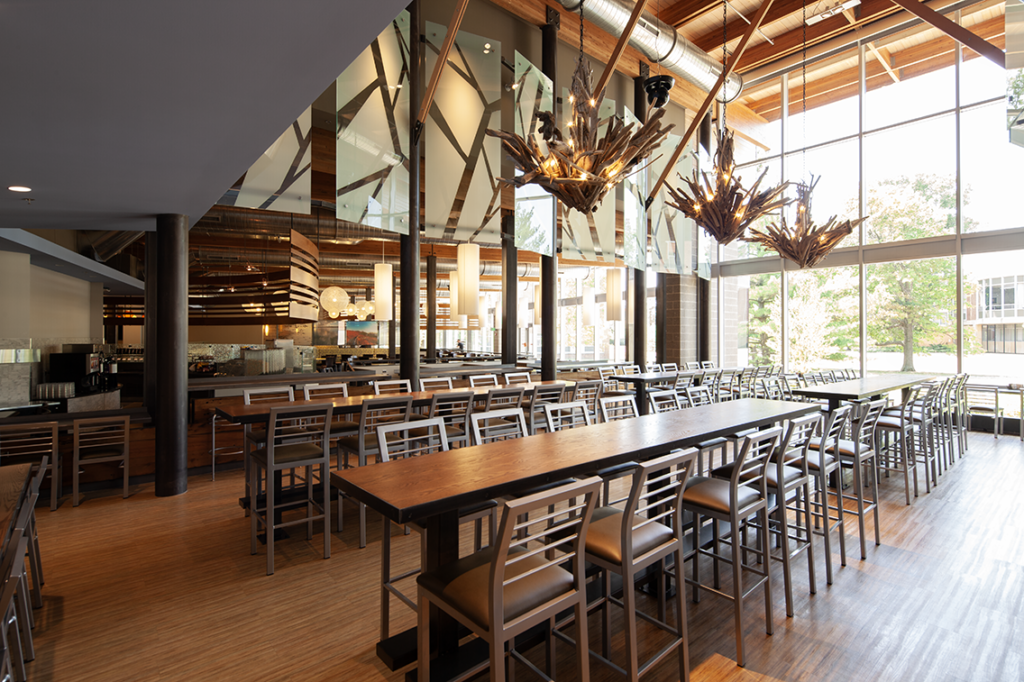

Coordinate Furniture With School Branding
Furniture can also become part of a school’s visual identity.
Powder coat colors, upholstery, wood finishes, laminates, tabletop designs, and custom details can be coordinated with a school’s existing brand palette. When paired with custom graphics and murals, these details help turn an ordinary cafeteria into a space that feels distinctly connected to the institution.
Rather than treating tables and chairs as an afterthought, schools can incorporate furniture into the overall interior design from the beginning.
A branded community table, for example, can become a focal point. School colors can appear subtly across chair frames or upholstery. Custom backs, tabletop graphics, and surrounding millwork can carry the same visual language throughout the room.
The goal isn’t simply to fill a cafeteria with furniture. It’s to create a cohesive student environment.
Think Beyond the Cafeteria
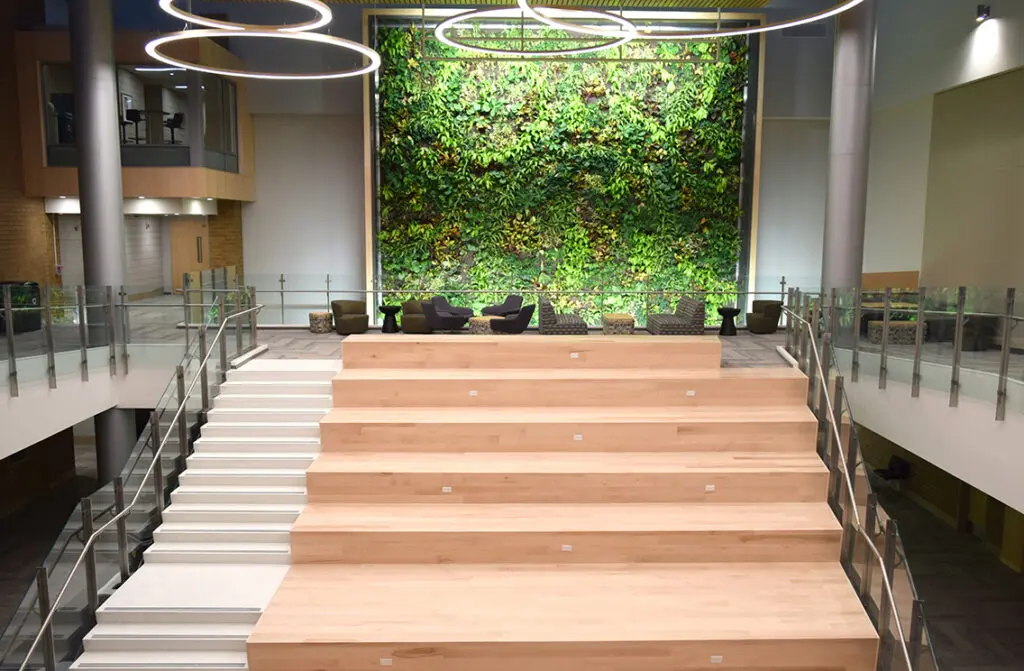
Durable educational furniture can serve far more than traditional dining halls.
Many of the same chairs, tables, stools, and custom seating solutions can support:
- Student commons
- Libraries
- Collaboration areas
- Campus cafés
- Student unions
- Study spaces
- Breakout areas
- Faculty and staff dining
- Residence hall common spaces
Choosing adaptable commercial furniture allows schools to create a consistent design language across campus while selecting products appropriate for the demands of each space.
Build a Better Student Space With SCI Custom
Every educational space has different requirements. Enrollment, traffic patterns, available square footage, branding, student demographics, and the ways students use the building all influence the right furniture solution.
That’s why SCI Custom takes a broader approach to educational environments.
From commercial cafeteria furniture and custom tables to booths, millwork, graphics, manufacturing, and installation, our team can help schools develop cohesive environments designed around the way students actually use them.
Whether you’re replacing worn cafeteria furniture, updating a student commons, or planning a complete K-12 or university dining renovation, investing in durable commercial furniture can help your space continue performing long after installation.
Ready to upgrade your student dining space? Explore SCI Custom’s commercial furniture collection or contact our team to start planning your next cafeteria or campus renovation.
Frequently Asked Questions
What type of furniture is best for a school cafeteria?
Commercial-grade chairs, tables, stools, booths, and banquettes are well suited for school cafeterias because they are designed for frequent use. The right mix depends on the size of the space, student population, dining program, and whether the cafeteria also functions as a student commons or collaboration area.
What should schools look for when buying cafeteria furniture?
Schools should consider durability, cleanability, commercial-grade construction, flexibility, comfort, maintenance requirements, available replacement components, and how easily the furniture can adapt to different uses of the space.
How can cafeteria furniture improve the student experience?
Providing different seating types gives students choices. Communal tables support groups, booths provide more enclosed gathering areas, counter seating works well for individuals, and flexible tables and chairs allow spaces to adapt to changing needs.
Can school cafeteria furniture be customized?
Yes. Depending on the product, commercial furniture can be customized through frame finishes, upholstery, laminates, wood finishes, dimensions, branding, and other design elements to complement a school’s interior and visual identity.
Does SCI Custom provide complete cafeteria design services?
SCI Custom works with K-12 schools, colleges, and universities on educational spaces ranging from individual furniture solutions to larger cafeteria and campus projects, with capabilities spanning design, custom furniture, millwork, manufacturing, logistics, and installation.
Tagged cafeteria, college, furniture, k-12, university